
If the unlikely question, “What percentage of the world’s oil and gas passes through the Strait of Hormuz?” ever made its way onto Who Wants to Be a Millionaire?, chances are most of us would know the right answer… but for all the wrong reasons. In case you missed it over the past few weeks: the answer is 20%.
From the Strait of Hormuz to your Packaging: why costs are rising!
In case you missed it over the past few weeks: the answer is 20%.
Since last March, the world has been absorbing the ripple effects of this major disruption. The supply chain impact extends far beyond petrochemical products, affecting a wide range of derivative goods as well.
It is, unfortunately, another reminder of just how dependent we are on oil, in some ways, almost as much as we are on the Internet… unfortunate, but true.
Impact on PRICES?
Since the closure of the Strait, the market has been affected by strong volatility and a high level of uncertainty.
From our side, since early March, we’ve been receiving a steady wave of price increase notices from our manufacturing partners and given the current context, it’s entirely understandable.
When it comes to packaging, it often comes down to two main categories: plastic and corrugated cardboard. In both cases, the market is being impacted… but for slightly different reasons.
Raw material COSTS!
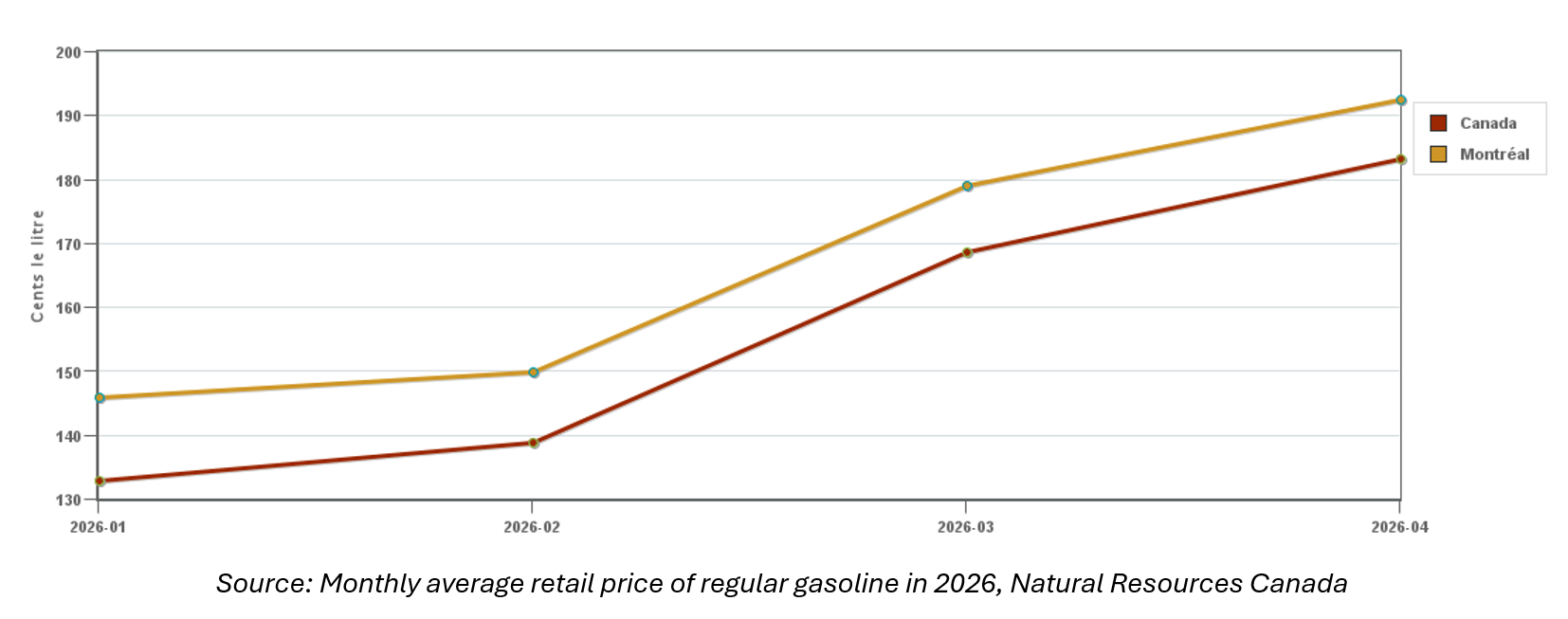
You don’t need to follow the markets to notice it, the gas pump makes it pretty obvious. If you’re not driving an electric vehicle, you’ve probably noticed that since late February 2026, gas prices have jumped by more than 30%.
Plastic, on the other hand, is made directly from these same petrochemical derivatives. So, when energy prices rise, plastic prices automatically follow.
Whys such a rapid INCREASE?
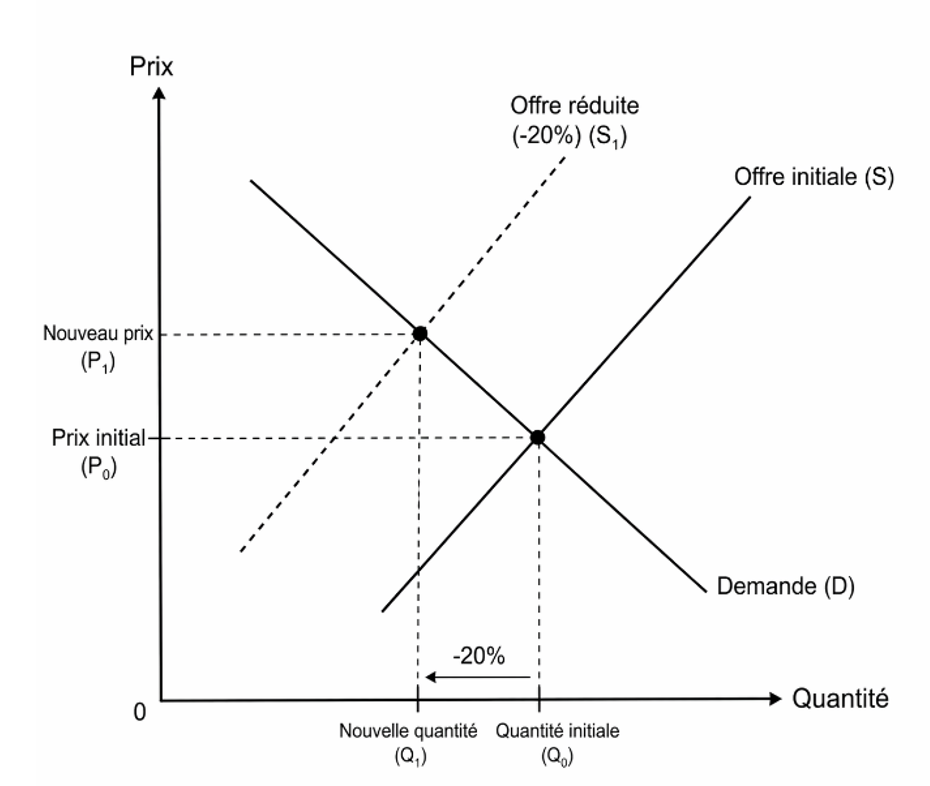
Because when such a significant share of the global supply is disrupted, everyone turns to the same alternative sources. Reduced supply combined with steady demand creates immediate pressure on prices.
And contrary to what one might think, just because the situation is unfolding far from here does not mean we are unaffected.
Right now, Europe and Asia are working to secure their supply chains and are turning to alternative markets, including North America. The result: pricing pressure is rising here as well.
LOGISTIC COSTS
The closure of traditional shipping routes has also forced many carriers to reroute around Africa.
What this means:
- Longer lead times
- Higher transportation costs
- Increased marine insurance premiums due to elevated risk
And this is where the domino effect starts to show. Even products that are less directly tied to oil, such as paper and corrugated cardboard, are seeing cost increases, mainly because:
- Energy costs are higher
- Transportation costs are higher
Our COMMITMENT?
Our priority remains the same: to limit the impact on you as much as possible. That said, in a force majeure context like this, market conditions can change very quickly.
- The gap between supplier announcements and actual price increases is often very short, and in some cases, increases take effect almost immediately.
- More and more products are being placed on allocation, meaning available quantities are limited and distributed based on purchase history.
Despite this, our close relationships with our manufacturing partners allow us to:
- Stay closely connected to market developments
- Anticipate changes whenever possible
- Act quickly to help mitigate the impact
But we want to be transparent: we cannot always absorb these increases.
That’s why we believe it’s important to clearly share the context in which the packaging market is currently evolving so you can better anticipate the impacts on your end as well.
In SUMMARY
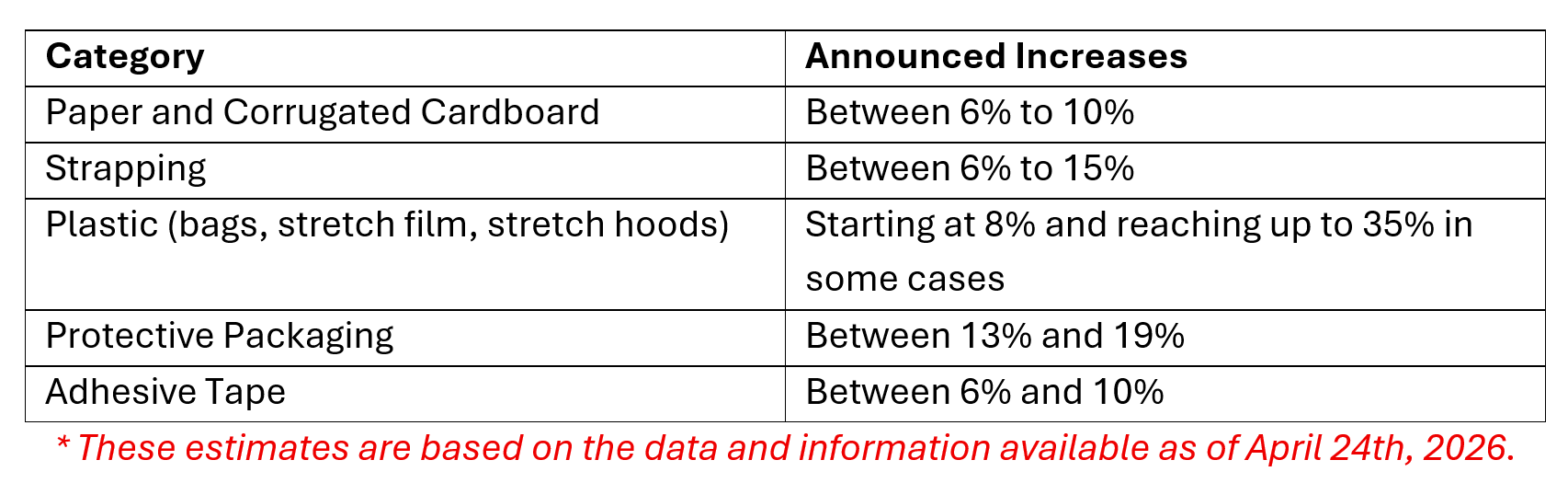
Speaking of impacts, here is an overview of the increases observed to date across different product categories.
In CONCLUSION?
In this context of rising costs and ongoing uncertainty, our team remains fully available to support you.
The good news is that solutions are available and sometimes the most effective ones are not the most obvious:
- Optimize your packaging
- Reduce material consumption
- And ultimately lower your costs
Our ability to recommend these types of strategies is made possible in part by our International Safe Transit Association optimization lab and our dedicated teams, who work hands-on to address your packaging challenges
In short, take advantage of it, that’s what they’re there for!


-
![]() Learn more
Learn moreAt CARTIER, we don’t volunteer for appearances. We do it because it reflects who we are. Because we truly believe that every little gesture, every hour given, every smile shared matters.
-
![]() Learn more
Learn moreToday, we’re turning words into action with an ambitious project: helping businesses collectively reduce up to 500 tons of plastic by 2030.
-
![]() Learn more
Learn moreCARTIER Packaging’s greatest ambition is not to become the largest packaging distributor, but rather the most relevant partner for its clients. The company focuses on creating a tangible impact by helping businesses adopt more responsible packaging solutions, particularly through source reduction of materials. .