

In today’s environment, many companies are facing the same reality: rising costs, raw material volatility, supply chain pressures, and the need to protect their operations. As the market becomes more unpredictable, one thing is clear: reducing at the source is no longer just an environmental initiative, it’s a strategic decision.
Less plastic. And we’re just getting started.
That’s exactly the mission behind #Paslepoids. And the good news? Together, we’ve already reached 142 tonnes reduced toward our collective goal of 500 tonnes by 2030. Discover how you can join the movement and reduce your exposure in today’s environment.
Why focus on PLASTIC?
Because the challenge is real.
50%
The packaging industry alone represents half of global plastic waste.
91%
Over 91% of Canadians support the strategy of reducing plastic waste.
9%
Since 2015, only 9% of plastic waste has been recycled. It all starts at the source.
It’s undeniable, packaging plays a major role in plastic consumption, largely because it is often overused. Which also means it’s a powerful lever to drive meaningful change. And that’s exactly where we come in!
We like results that are concrete and MEASURABLE!
Since the launch of the #Paslepoids initiative, one thing has become clear: when you challenge packaging, results tend to follow.
- Tonnes of plastic eliminated
- Optimized packaging recipes
- Reduced material without compromising protection
- Lower GHG emissions (less plastic means fewer emissions)
The financial impact should not be overlooked. Using only what’s necessary often leads to reduced costs because you stop paying for unnecessary materials. A key advantage in today’s market.
What do they all have in common? Reduction! The first principle of the 3Rs is often where the biggest impact lies. You don’t need to change everything to make a difference, reducing is a powerful starting point, and more often than not, one reduction leads to another. Less material = fewer GHG emissions and lower costs.
A growing number of companies are joining the initiative and embracing a more sustainable vision for the future of packaging. They are demonstrating a clear commitment to driving meaningful change in environmental responsibility. #Paslepoidspartner
Here are a few of them:


How do we get THERE?
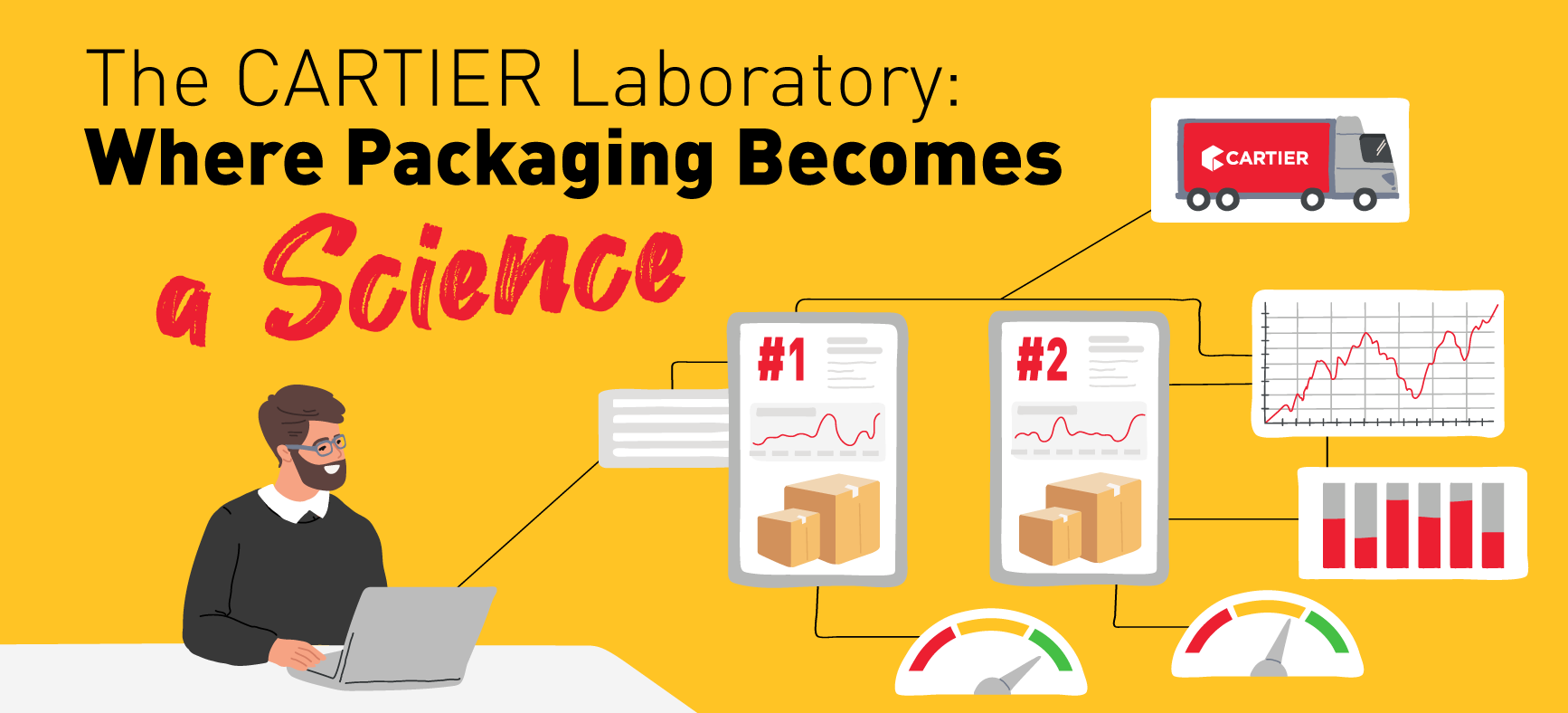
Not with intuition, but with data and science! In our laboratory, which follows ISTA and ASTM standards, we replicate real transportation conditions to:
✔ Test resistance
✔ Measure impacts
✔ Compare different options
✔ Optimize every component
We don’t guess, we validate. Every solution is tested to ensure it aligns with your operational reality. This allows us to accurately identify what’s truly required, no more, no les
A collective achievement (and a strategic LEVER)
This project is not just ours. It belongs to our clients, our partners, and every company committed to doing better.
Because today, packaging is no longer just a cost. It is a strategic lever that enables meaningful change:
- Reduce your environmental footprint
- Improve operational performance
- Meet increasingly demanding regulatory requirements
- Stay competitive in a rapidly evolving market
We are proud of how far we’ve come and even more driven by what lies ahead.
Why join #PASLEPOIDS?
Because the benefits are concrete and fast.*
✔ Reduce your packaging costs
✔ Lower material usage (the first principle of the 3Rs – Reduce, Reuse, Recycle)
✔ Decrease product damage and returns
✔ Improve your environmental footprint
✔ Stay ahead of evolving regulatory requirements
✔ Become a driver of sustainable change through concrete, measurable, and credible actions (no greenwashing)
*Each project has its own optimization potential. Results vary depending on the context but are always based on structured analysis and measurable data.
What's NEXT?
The real question is no longer: "Can we reduce plastic?"
But rather: "What can we improve right now?"
Want to take concrete action within #Paslepoids? Start with a pallet wrap optimization mandate or even simpler: let our team perform a free packaging diagnostic, with no obligation
In just a few steps, you could identify opportunities to reduce material, improve load stability, lower your costs.
Because in the end, when it comes to our commitment, overpackaging simply won’t hold up.

-
![]() Learn more
Learn moreWhen two companies share the same vision of sustainable progress, results come quickly. At CARTIER, it all started with a simple word-of-mouth recommendation... and a somewhat bold idea.
-
![]() Learn more
Learn more2026 is shaping up to be a pivotal year for packaging. In a context where every business decision must be more thoughtful, more sustainable, and more measurable, packaging is officially moving from the status of a “consumable” to that of a strategic lever. You agree, right?
-
![]() Learn more
Learn moreOur laboratory isn’t here to complicate your projects, but to help you make the right decisions, at the right time, with the right data. Packaging is becoming a strategic lever for many in 2026, so now is the perfect time to reassess it and consult experts to support your continuous improvement.


