

2026 is shaping up to be a pivotal year for packaging. In a context where every business decision must be more thoughtful, more sustainable, and more measurable, packaging is officially moving from the status of a “consumable” to that of a strategic lever. You agree, right?
Packaging Trends for 2026
Between stricter regulations, increased cost pressures, and high expectations regarding performance and sustainability, companies are seeking more than ever reliable solutions and partners capable of optimizing and innovating.
What does 2026 have in store? Here are five key trends to watch and how CARTIER can support you through this evolution.
The End of ''Kind-of recyclable''?
Making room for transparency and data
The days of placing a recyclability symbol “to the best of our knowledge” are over. In 2026, and even since 2025, Canadian requirements are tightening. Companies must now take concrete actions towards eco-responsibility.
Bill C-59 strengthens the rules surrounding environmental claims. It is no longer enough to state; companies must demonstrate. Greenwashing is no longer tolerated, forcing businesses to show great rigor in their communications.
Packaging is thus becoming a true information medium, even an environmental passport. QR codes and enhanced technical data sheets provide access to key data such as composition, carbon footprint, origin, and usage recommendations. This approach applies to primary, secondary, and tertiary packaging alike.
This new reality requires rigorous data management and informed decision-making. That is precisely where CARTIER comes in. Thanks to our experienced procurement team, we help you select solutions aligned with your objectives and needs. In fact, we have set ourselves the goal of increasing each year our offering of products with enhanced sustainability attributes, so we can support you when you are ready to take action.
Less material, less CO₂
And a lot more science
Material reduction is not new, but in 2026 it becomes more precise and strategic. Every gram counts, as long as performance remains optimal. Packaging that is too fragile, leading to breakage and returns, cancels out any environmental benefit.
Companies now evaluate impact per unit shipped, per pallet, or even per packaging configuration. Reducing over-packaging, light-weighting materials, and optimizing components increasingly rely on analysis, modeling, and GHG tracking tools.
Our ISTA- and ASTM-certified laboratory is fully aligned with this trend. By measuring mass, materials, GHG emissions, and packaging performance, we help you reduce environmental footprint without compromising product protection.
Less, yes, but better. Always.
Paper 2.0 and circular solutions
Replace, reuse, rethink
In 2025, paper began establishing itself as an alternative to plastic. In 2026, however, the market recognizes that it is not automatically more ecological. It all depends on the quantity used, mechanical performance, and application context. In short, it is all about the numbers.
Thanks to innovations such as reinforced papers and honeycomb structures, many applications are becoming not only possible, but high-performing. The Technoplat PW wrapping machine, which uses stretchable paper, illustrates this evolution, provided stability and optimal material usage are properly validated.
At the same time, reusable industrial solutions are gaining ground. Multi-use covers, pallet nets, returnable bins, and reusable protection systems are becoming viable options, particularly in closed-loop systems. Once considered complex, these solutions now integrate more easily into operations. CARTIER is currently testing several of them to validate their real-world performance. Here are a few examples:
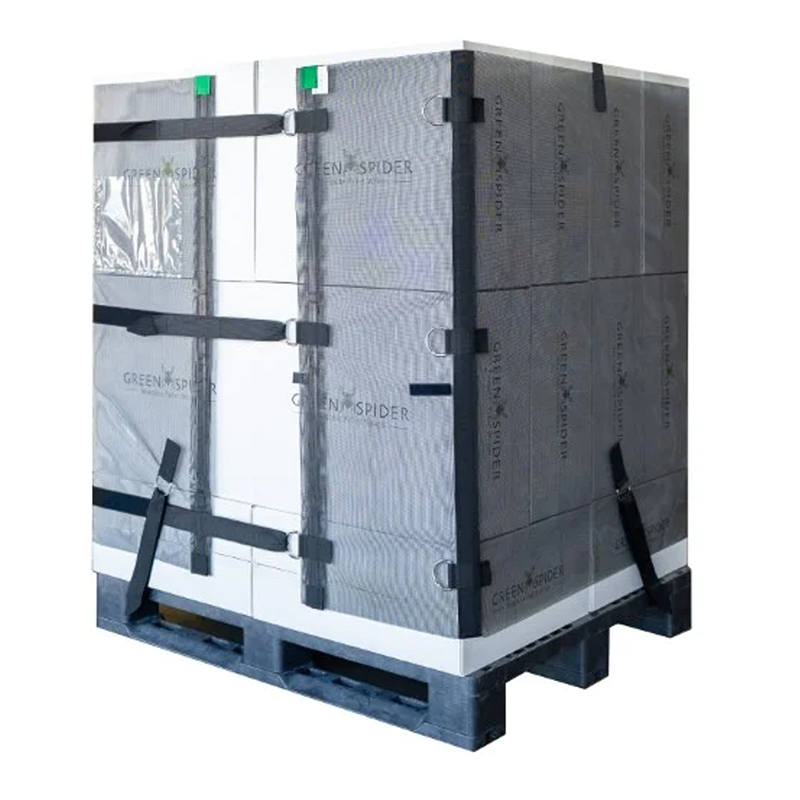
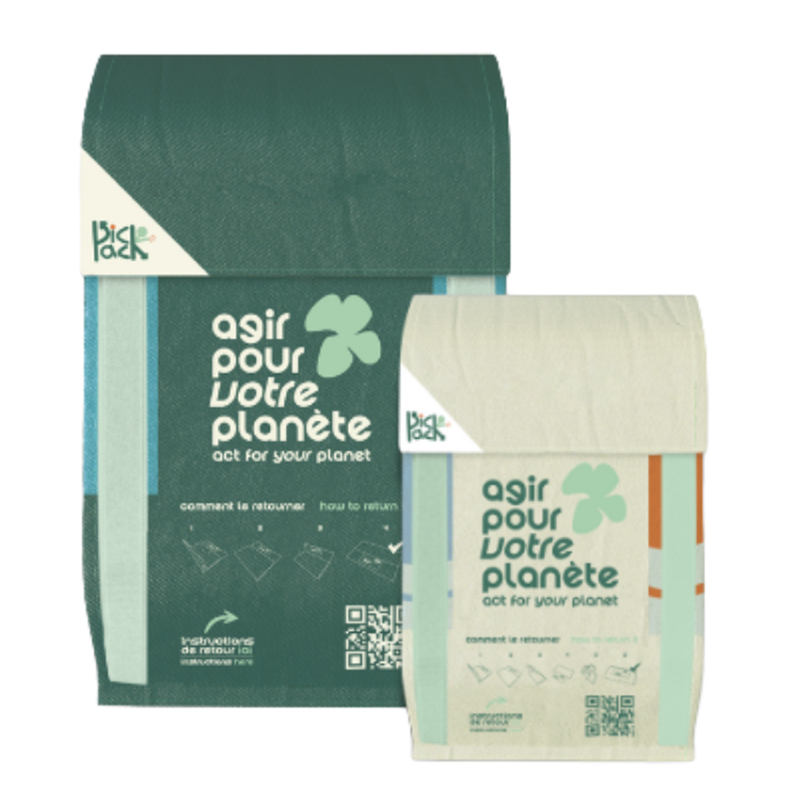
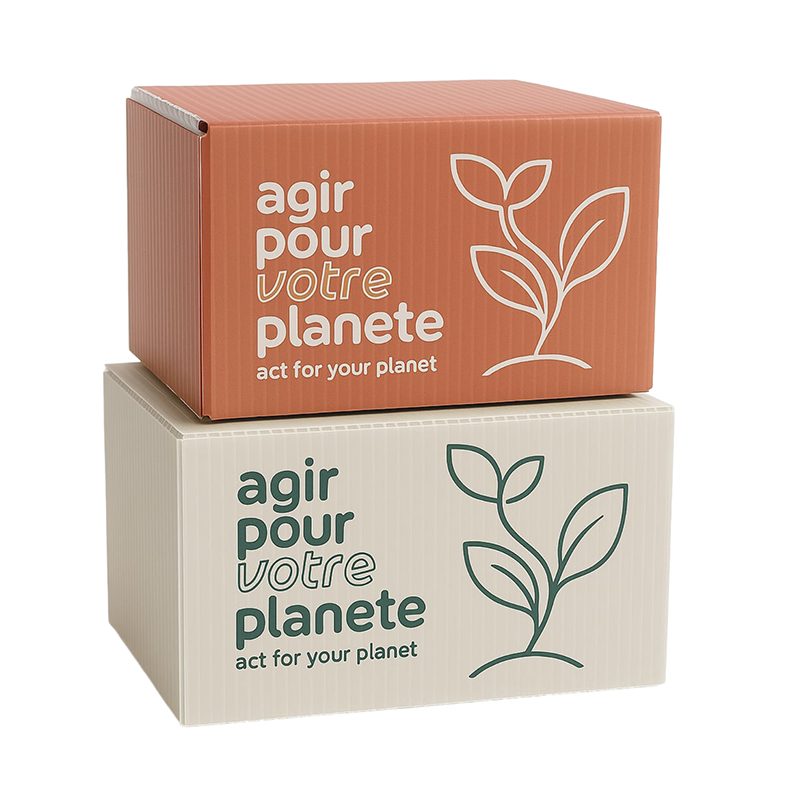
The real question is no longer “paper or plastic?” but rather “which option is most sustainable in my specific context?” Our laboratory analyses provide data-driven answers.
Modular and smart automation
Good news for 2026: automation no longer necessarily means complex projects. Equipment is now more modular, more accessible, and above all, smarter.
New machines can automatically adjust parameters based on load such as tension, pre-stretch, material usage or store multiple packaging recipes depending on the product. Some can even detect instability risks before they occur. Others suggest recipe adjustments or anticipate maintenance needs.
In a context of rising labor and raw material costs, automation becomes both an economic and environmental choice. Uniform, optimized packaging reduces breakage and unnecessary consumption.
We are also seeing the arrival of machines that facilitate material recycling, such as equipment that compacts leftover stretch film or shreds certain components to ease processing by recycling facilities.
Here are a few examples currently available on the market and soon to be offered by CARTIER:
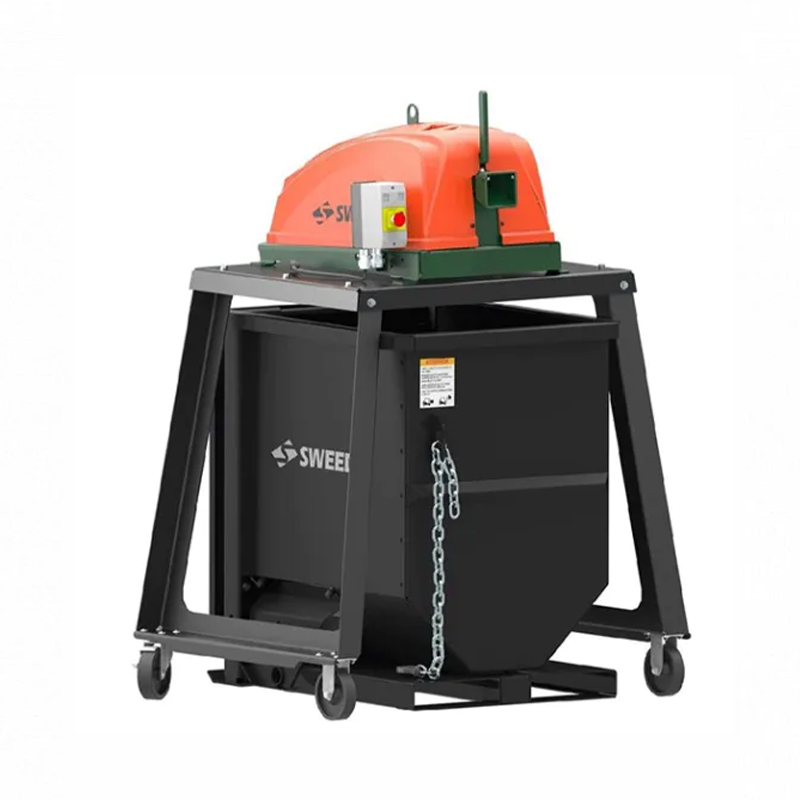
Plastic Shredder
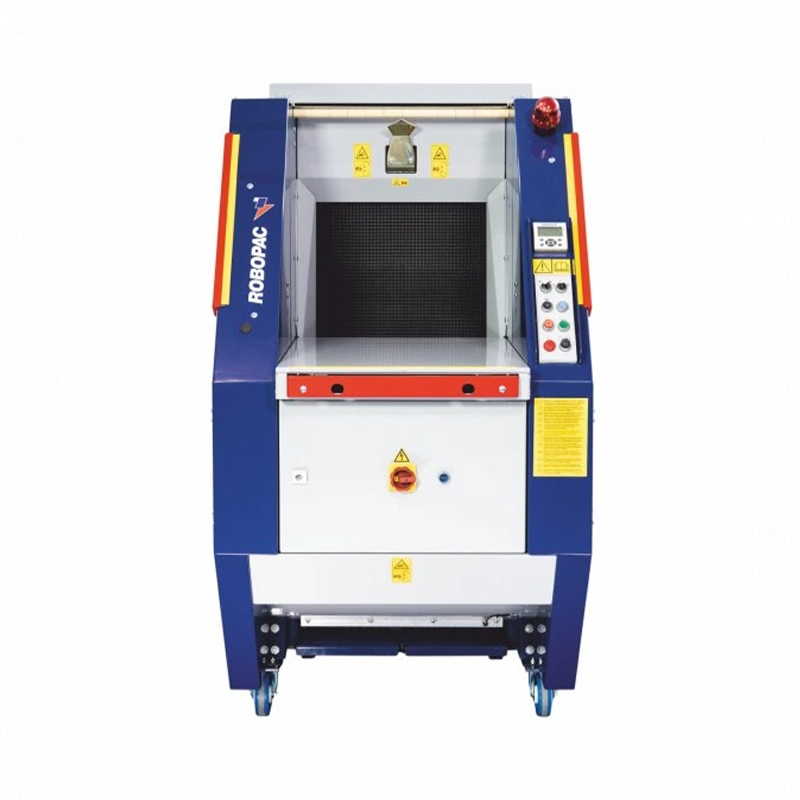
ReCYCLE – Packaging Waste Compaction and Volume Reduction Machine
At CARTIER, our technical teams are already supporting this transition. We offer solutions tailored to your real needs, and our technicians can handle installation, maintenance, and equipment repairs as required.
Packaging as a strategic internal competency
The final major trend is not about materials or technology, but about organizational transformation. In 2026, companies stop seeing packaging as a simple purchasing line item. They turn it into a lever for overall performance.
We are seeing:
- the creation of internal packaging committees
- the emergence of optimization-focused roles
- the integration of GHG-reduction goals per unit shipped
- the standardization of packaging recipes
- the implementation of annual audits
Packaging optimization becomes a strategic reflex that reduces costs, improves logistics, and strengthens sustainability. To support these teams, CARTIER acts as a key partner by offering diagnostics, testing, training, automation, and ongoing support.
In other words, we no longer just sell packaging, we deliver expertise that drives performance.
2026, The Year Packaging Proves Its value
All 2026 trends point toward one reality: packaging must perform, be measurable, and directly contribute to your business and sustainability goals. Whether it is reducing quantities, validating alternatives, automating processes, or ensuring regulatory compliance, packaging has never been more strategic.
At CARTIER, we are here to guide you every step of the way, with concrete data and solutions tailored to your needs.
2026 will be innovative, sustainable, and full of optimization opportunities. Revolutionizing packaging toward a more sustainable world is no longer a distant goal, it is today’s reality.

-
![]() Learn more
Learn moreWhen two companies share the same vision of sustainable progress, results come quickly. At CARTIER, it all started with a simple word-of-mouth recommendation... and a somewhat bold idea.
-
![]() Learn more
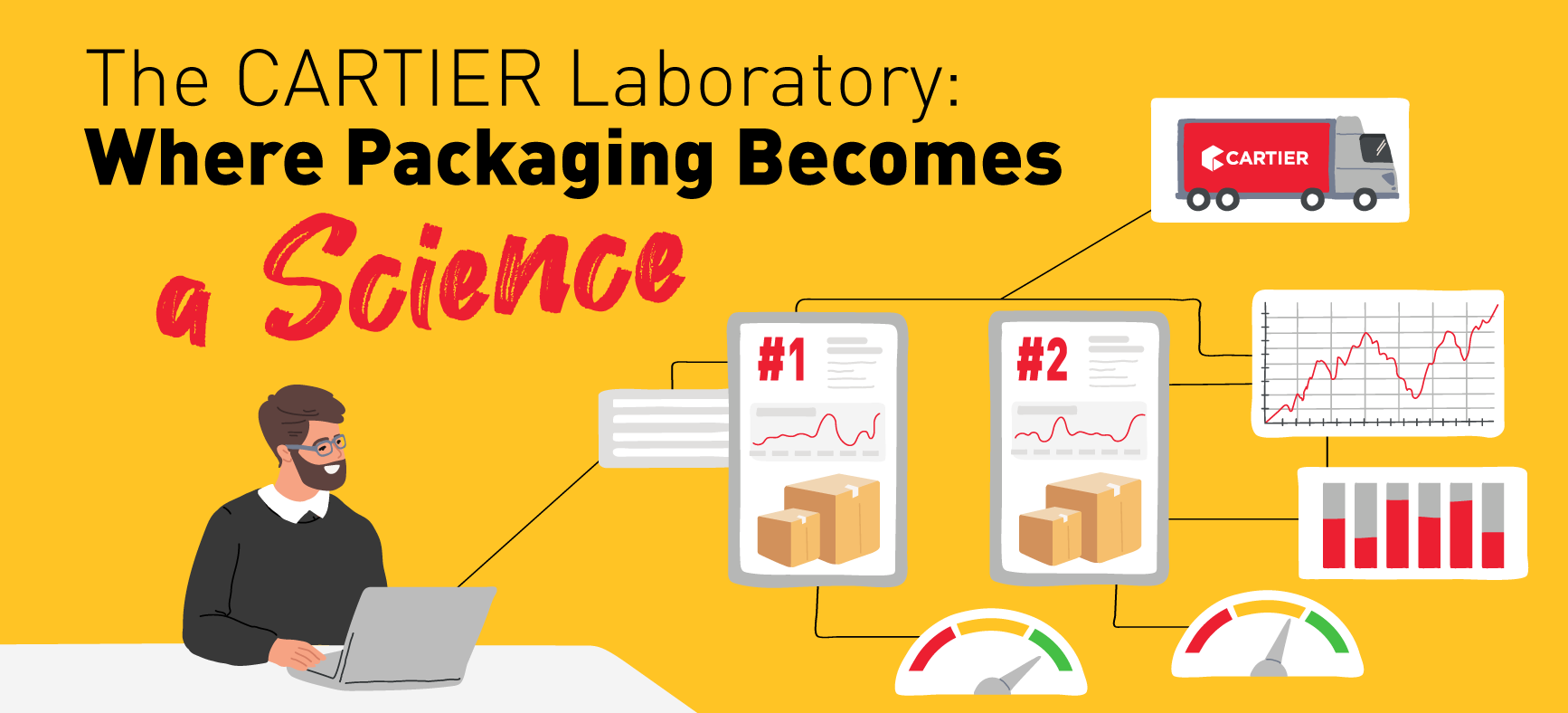
Learn moreOur laboratory isn’t here to complicate your projects, but to help you make the right decisions, at the right time, with the right data. Packaging is becoming a strategic lever for many in 2026, so now is the perfect time to reassess it and consult experts to support your continuous improvement.
-
![]() Learn more
Learn moreIn today’s environment, many companies are facing the same reality: rising costs, raw material volatility, supply chain pressures, and the need to protect their operations. As the market becomes more unpredictable, one thing is clear: reducing at the source is no longer just an environmental initiative, it’s a strategic decision.


